







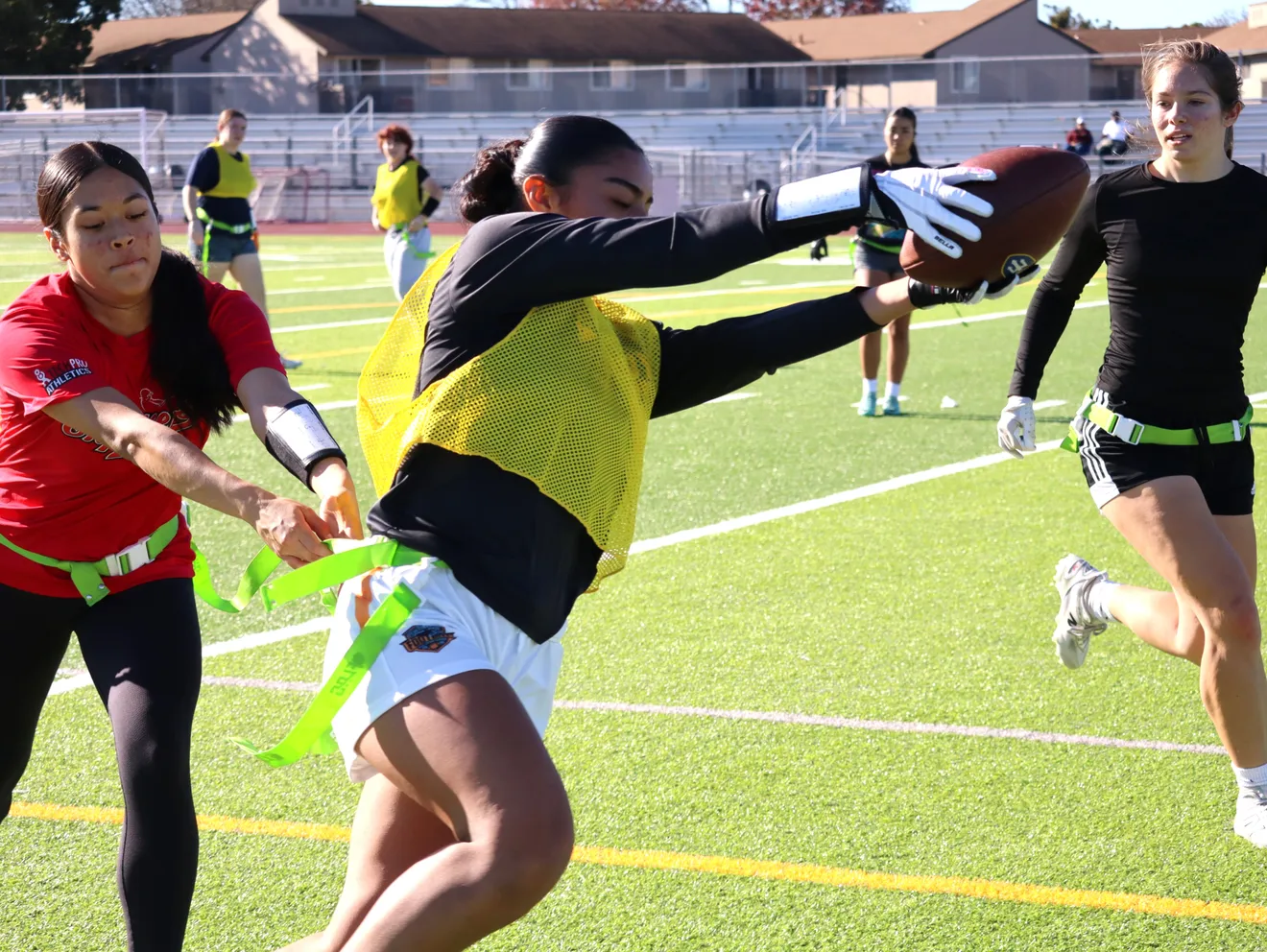
High school flag football continues to move from emerging sport to structured competition. The National Federation of State High School Associations (NFHS) has approved eight rule changes that will take effect beginning with the 2026–27 seasons, aiming to improve game flow, competitive balance and safety as the sport expands across the country.
The updates arrive during a period of significant growth, particularly on the girls’ side, as more states adopt flag football programs and push toward standardized national rules.
A Comeback Rule Reshapes Strategy
The headline change introduces a possession-retention option designed to mirror an onside kick in tackle football. Teams trailing on the scoreboard can now attempt to keep the ball after a score and extra-point try by converting a fourth-down play from their own 20-yard line.
Previously, possession automatically switched to the opponent. The new rule adds late-game strategy and creates new opportunities for comebacks, reflecting the NFHS’ effort to align flag football mechanics with more familiar football concepts.
Field Position and Game Management Updates
Several rule revisions address how games restart and how coaches manage critical moments:
- After a safety, the team that surrendered the points will put the ball in play with a scrimmage kick from its own 20-yard line, creating a stronger field-position advantage for the scoring team.
- Teams will receive three timeouts per half instead of two, giving coaches additional flexibility late in games.
- State associations will have the option to use instant replay during postseason contests, underscoring the growing competitive stakes at championship levels.
The NFHS also approved a new optional field dimension of 300 by 160 feet, offering more flexibility for schools adapting existing facilities.
Safety Clarifications and Roster Flexibility
Other changes focus on preserving the non-contact nature of the sport while improving clarity for officials and athletes.
Teams must still start games with seven players but can continue with as few as five if injuries or disqualifications occur.
The rules committee also introduced clearer language around hurdling and prohibited striking or punching the ball out of a player’s possession, tightening safety standards and reducing unnecessary contact.
Growth Driving Standardization
The rule changes reflect the sport’s accelerating momentum nationwide. Nearly 69,000 girls now participate in high school flag football across more than 2,700 schools, with 17 state associations already sanctioning the sport. As participation climbs, the NFHS has increasingly focused on creating consistency across states, giving programs a unified structure while maintaining the fast-paced style that has fueled flag football’s popularity.
A Defining Moment for the Sport
Taken together, the eight rule changes signal more than routine adjustments. They mark another step in the institutionalization of high school flag football, a sport rapidly carving out its own identity while borrowing strategic elements from traditional football.
With new comeback mechanics, expanded coaching tools and clearer safety language, the 2026–27 rulebook positions flag football for its next phase of growth as one of the fastest-rising sports in the high school landscape.